June 8, 2026
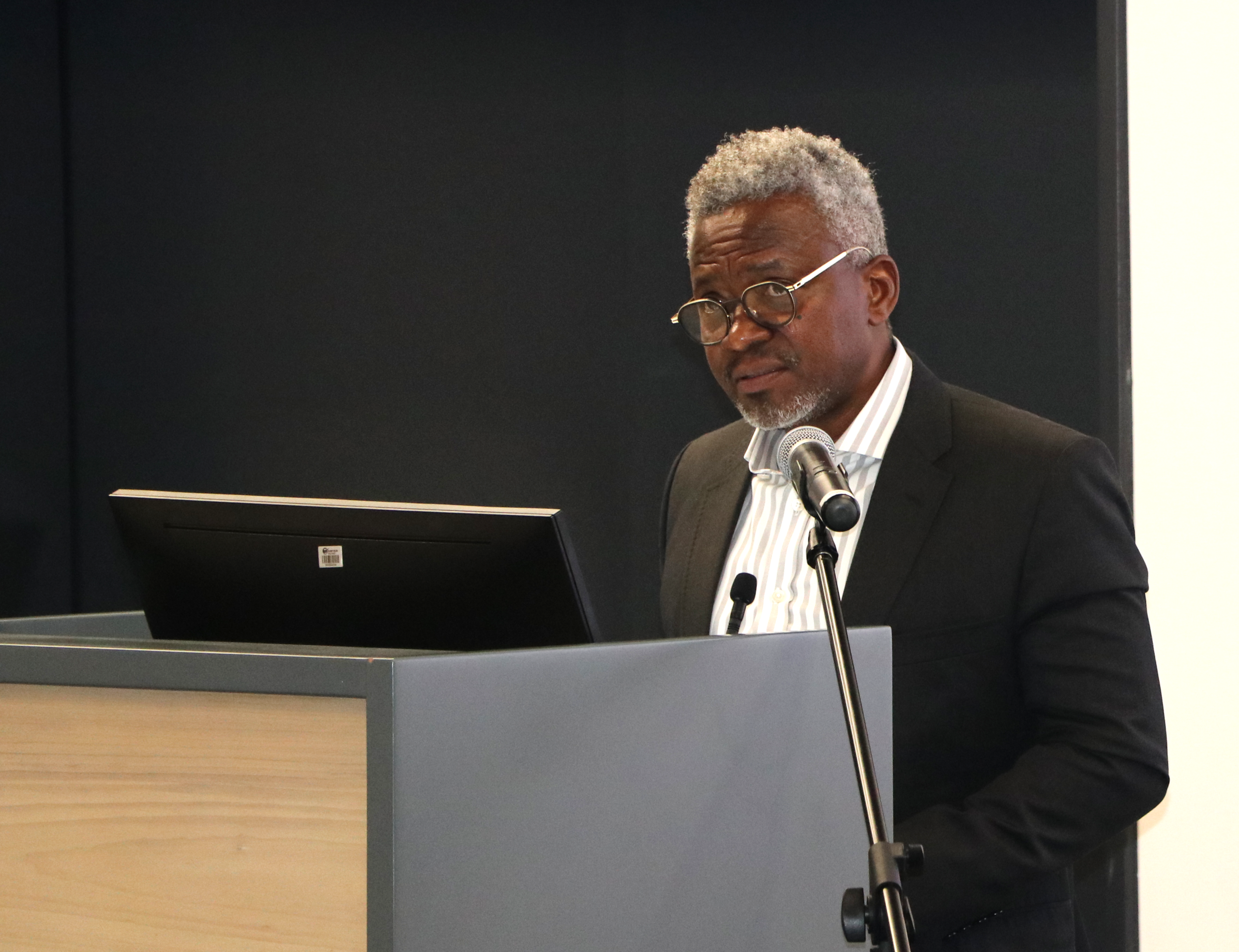
Opening Remarks by Mr. Humbulani Mudau, CEO of SANSA
SANSA Hermanus, Western Cape
Programme Directors,
Representatives of the International Civil Aviation Organization (ICAO),
Members of the ICAO Meteorology Panel and the Working Group on Meteorological Operations Groups Space Weather Work Stream,
Representatives of aviation authorities, airlines, air navigation service providers and regulators,
Space weather experts and service providers, Distinguished guests, Ladies and gentlemen,
Good morning.
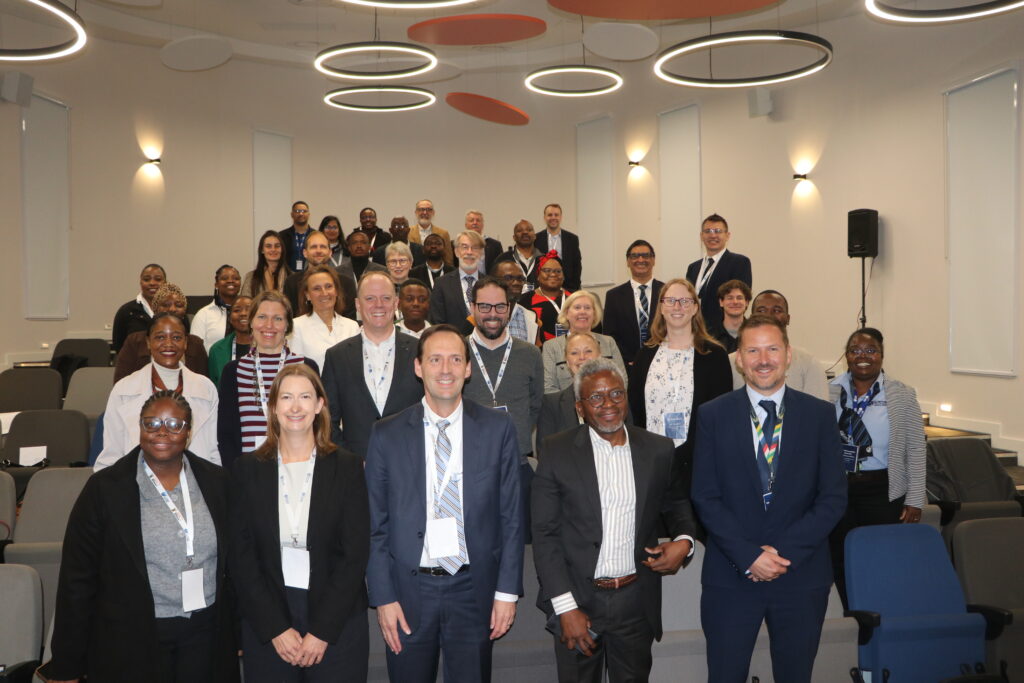
It is both an honour and a privilege to welcome you to South African National Space Agency (SANSA) Space Science in Hermanus for the Second ICAO Space Weather User Workshop. On behalf of SANSA and the Department of Science, Technology and Innovation (DSTI), I extend a warm welcome to all delegates joining us from around the world, as well as to our colleagues from across the South African aviation, meteorological, scientific and technological communities.
Your presence here today reflects the growing recognition that space weather is no longer a niche scientific discipline. It is now an essential operational consideration for aviation safety, communications systems, navigation services, and the broader global economy. This gathering is particularly significant as it marks the first time the ICAO space weather community has convened on African soil. It is a historic milestone not only for SANSA but also for South Africa and the African continent as a whole. It demonstrates Africa’s growing role in global scientific collaboration and in supporting critical international services.
The fact that these important ICAO meetings are being hosted here in Hermanus is also a recognition of the capabilities SANSA has developed over many years through sustained investment in science, infrastructure, innovation and international cooperation.
Ladies and gentlemen,
Every day, millions of people board aircraft expecting to reach their destinations safely and efficiently. What many travellers do not realise is that conditions on the Sun can affect systems fundamental to modern aviation. Solar flares, geomagnetic storms and energetic particle events can disrupt high-frequency communications, affect satellite navigation systems, increase radiation exposure on polar routes, and impact the technologies on which aviation increasingly depends.
As aviation becomes more connected, digital and reliant on space-based infrastructure, understanding and managing space weather risks is increasingly important. The challenge before us is therefore not only scientific but operational. The question is not whether space weather affects aviation. The question is how effectively we can translate scientific observations into actionable information to support decision-making, enhance safety, and strengthen resilience across the global aviation system.
That is precisely why this workshop is so important.
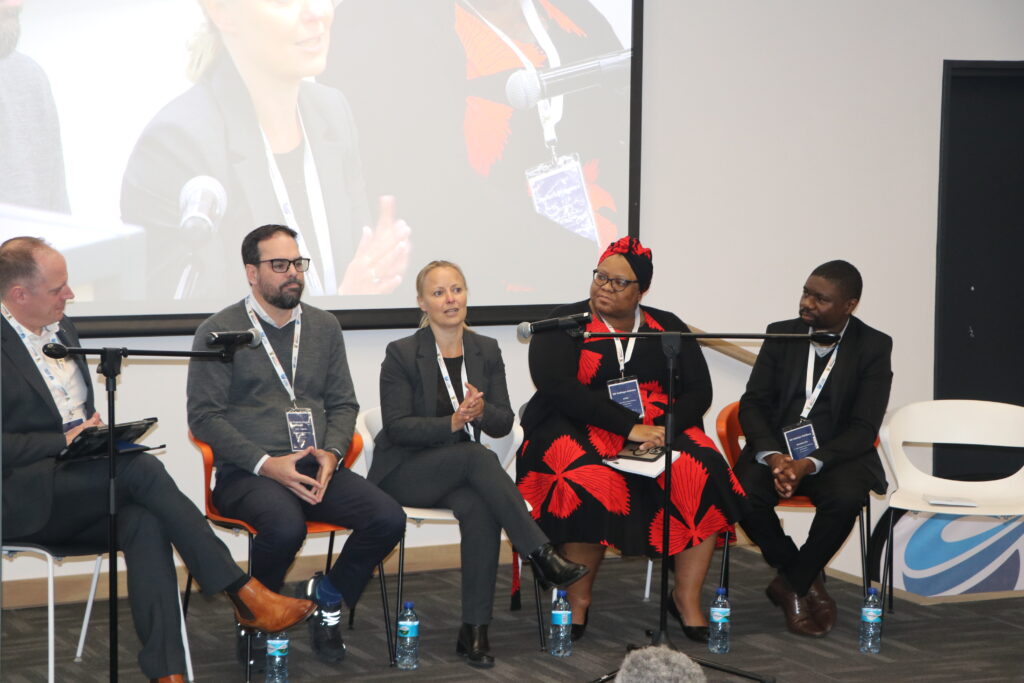
Over the next two days, you will review recent space weather events, assess lessons learned, explore future enhancements to the ICAO Space Weather Information Service, and engage directly with users and stakeholders. These discussions are essential to ensuring that the services we provide continue to meet operational needs and deliver value to the aviation community.
Ladies and gentlemen, at SANSA, we understand the importance of translating scientific excellence into practical societal benefit. Through our Space Science Programme, we operate one of the world’s leading space weather monitoring and forecasting capabilities. Our scientists and engineers continuously observe the Sun and the near-Earth space environment, providing critical information for national and international stakeholders.
SANSA is proud to serve as an ICAO-designated Regional Space Weather Centre, contributing to the global network that provides space weather information to the international aviation community. This responsibility reflects the trust the international community has placed in South Africa’s scientific capability and operational excellence.
Our work is part of a much broader vision.
South Africa has long recognised that investment in science, technology and innovation is essential to sustainable development, economic competitiveness and societal resilience. In particular, space science offers unique opportunities to address both national and global challenges. Whether supporting disaster risk reduction, climate monitoring, navigation, communications, scientific research, or aviation safety, space-based capabilities are increasingly central to modern life.
At SANSA, our vision is to ensure that Africa is not merely a consumer of space-based services but an active contributor to global knowledge, innovation and operational capability. Hosting this workshop is therefore aligned with our broader commitment to advancing international cooperation, strengthening African participation in the global space sector, and building partnerships that deliver shared value.
Ladies and gentlemen, one of the most encouraging aspects of the ICAO Space Weather Programme is the collaborative spirit that underlies it. No single organisation, country or region can address space weather challenges on its own. The Sun does not recognise national borders. The effects of space weather are global, and our response must therefore be global as well.
The challenges posed by space weather remind us that our interconnected world depends on coordinated solutions. The satellites that enable navigation, communications and aviation services serve users across continents, and the impacts of significant space weather events can be felt simultaneously across multiple regions of the world.
This reality underscores the importance of international cooperation, scientific exchange and operational collaboration. It is through partnerships such as those fostered by ICAO that we can share observations, data, technologies, lessons learned and best practices to improve the quality, consistency and reliability of space weather services worldwide. Collaboration also plays a key role in strengthening capacity across regions. By working together, established and emerging space-faring nations alike can help build a more resilient global system while ensuring that knowledge, expertise and technological advances are shared for the benefit of all.
As South Africa and SANSA continue to expand our contributions to the international space sector, we remain committed to the principle that scientific progress accelerates when nations collaborate openly, learn from one another, and work collectively to address common challenges. The gathering we begin today is a powerful demonstration of that principle in action. The ICAO Space Weather Information Service is an excellent example of what can be achieved when scientific institutions, regulators, operational service providers and end-users collaborate towards a common goal.
As we gather here this week, we have an opportunity not only to discuss technical matters but also to strengthen relationships, share experiences and identify new opportunities for collaboration. I encourage all participants to engage openly, challenge assumptions, share lessons learned, and actively contribute to the discussions.
The future effectiveness of the global space weather information system depends on the collective expertise in this room.
To our international guests, I hope your visit to Hermanus offers not only the opportunity to participate in productive discussions but also to experience South African hospitality and learn more about the remarkable work being undertaken here at SANSA. To our local stakeholders and aviation partners, I encourage you to use this opportunity to deepen your understanding of space weather and to explore how these services can further support operational decision-making and resilience across the aviation sector.
In closing, I would like to express my sincere appreciation to the ICAO, the Meteorology Panel, the Working Group on Meteorological Operations Groups Space Weather Work Stream, and all the organisers who have worked tirelessly to make this workshop possible.
I wish to thank the SANSA team, whose dedication and professionalism have enabled us to host this important international gathering. I also wish to thank the DSTI for all the support provided to SANSA to build space weather capacity and capabilities for the country, region and the African continent.
The conversations that begin today will help shape the future of space weather services for aviation worldwide. More importantly, they will strengthen the partnerships, networks and collaborative mechanisms that enable us to safeguard collectively the technologies and systems upon which modern society depends.
Let us use this opportunity to deepen international cooperation, share knowledge and best practices, drive innovation, and build a more resilient global space weather information service for the benefit of all nations. I wish you a productive and successful workshop, and I am delighted to declare the Second ICAO Space Weather User Workshop officially open.
Thank you.