
February 10, 2026
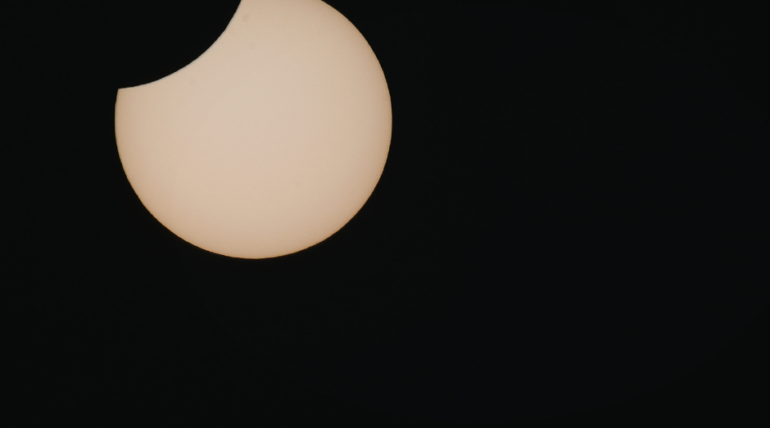
On 17 February, a partial solar eclipse will be visible from large parts of South Africa. This is a rare occurrence where the Moon passes between the Earth and the Sun, obscuring the Sun. During a partial solar eclipse, the Moon, Sun, and Earth do not align in a perfectly straight line and the Moon casts only the outer part of its shadow, known as the penumbra, onto Earth.
This appears as though the Moon has taken a “bite” out of the Sun in the afternoon sky. The full eclipse, often called the “ring of fire,” will only be visible from remote parts of Antarctica, but observers in South Africa will be able to witness the partial eclipse as the Moon obscures part of the Sun. SANSA will use its new solar telescope to stream the eclipse live for viewers, offering a rare chance to witness the dynamic movement of our solar system in real time.
SANSA recently acquired the solar telescope, which will serve as a redundancy for observing the Sun in the SANSA Space Weather Centre. This event provides an opportunity to highlight the telescope’s capabilities.
SANSA will stream the eclipse, as viewed from the solar telescope at SANSA Hermanus on Youtube. You can watch it here: https://youtube.com/live/DfwhUn3OKIs?feature=share
The partial eclipse will begin at 14:01 South African Standard Time (SAST), reaching maximum eclipse at 14:23 SAST with about 5% solar coverage in the Western Cape. The partial eclipse will end at 15:24 SAST, with a full duration of 1 hour and 23 minutes.
Viewers are advised to protect their eyes and never look directly at the Sun but instead use eclipse glasses or special solar filters.
For a map on eclipse information, visit: https://www.timeanddate.com/eclipse/eclipse-tips-safety.html
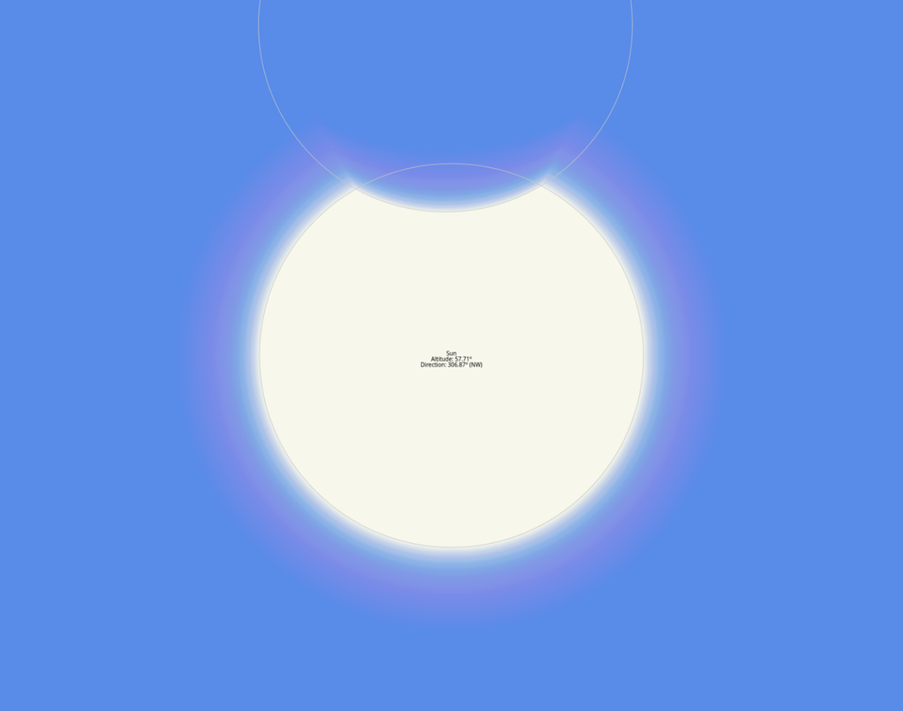
This image shows what the maximum eclipse will approximately look like in the Western Cape. (Image credit: timeanddate.com)
The next partial lunar eclipse in Cape Town will be on 28 August 2026.