February 3, 2026
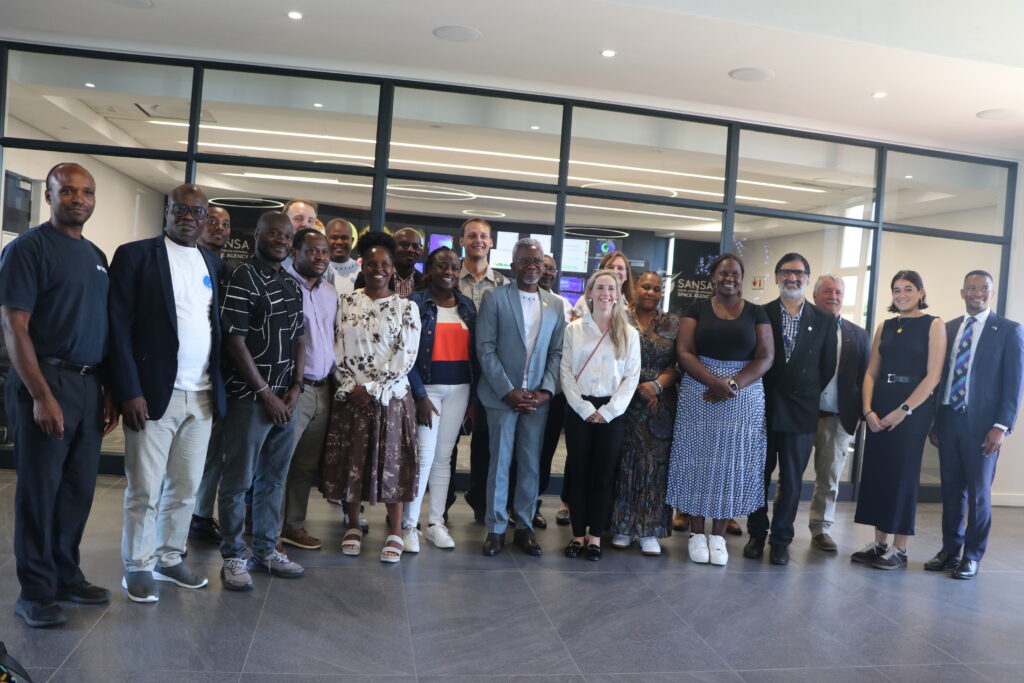
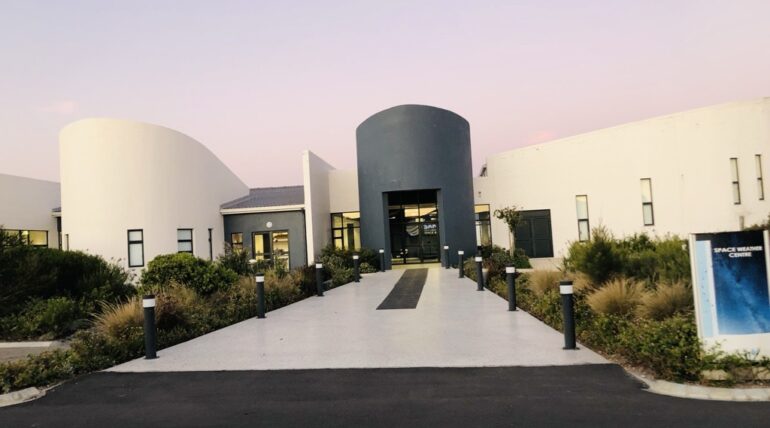
Last week, the South African National Space Agency (SANSA) was honoured to welcome two groups of delegates to its Hermanus site in the Western Cape to showcase the facility’s current successes and future growth potential.
On Wednesday, 28 January 2026, the Parliamentary Portfolio Committee (PPC) on Science, Technology and Innovation visited the SANSA Hermanus facility as part of its oversight programme. Representatives from the Department of Science, Technology and Innovation (DSTI) accompanied the PPC.
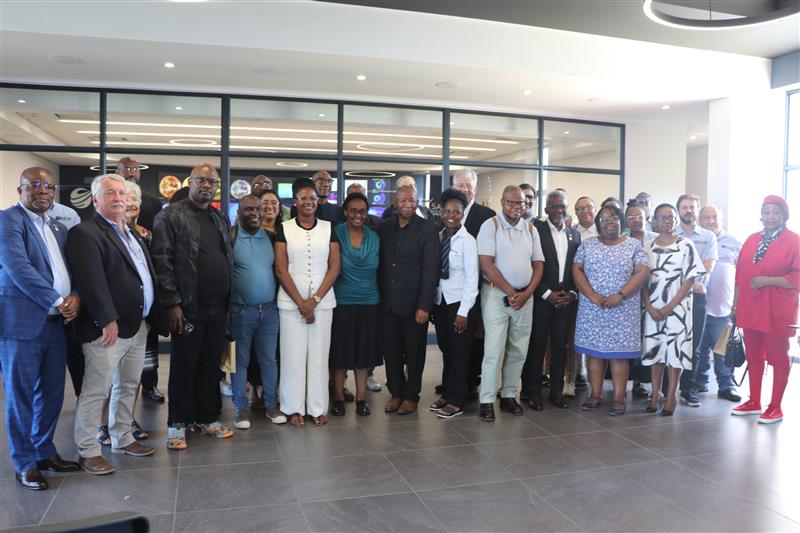
SANSA CEO Humbulani Mudau welcomed the delegation from the PPC and DSTI to the operational Space Weather Centre at SANSA Hermanus and facilitated introductions. Acting Chairperson of the PPC, Thembeka Mchunu, emphasised the importance of these oversight visits in providing the committee with a deeper understanding of the work undertaken by the Space Agency and at the Hermanus facility.
Raoul Hodges, Executive Director at SANSA Space Science, presented the PPC and DSTI with the latest achievements from SANSA’s research cohort, demonstrating that SANSA is a key driver of space science research within both a national and continental context.
A peer-reviewed study analysing a decade of African space science research revealed that South Africa continues to lead the continent in scientific output (Adebesin, B. O., et al. (2025). Space science research in Africa: Publication trends, citation analysis, and collaborative patterns. Earth and Space Science, 12, e2025EA004254. https://doi.org/10.1029/2025EA004254).
The study found that Africa published 2 290 space science papers between 2014 and 2023, with South Africa contributing just over 40% of this output. Across its Space Science and Earth Observation programmes, SANSA published approximately 352 research papers during the same decade (read more here).
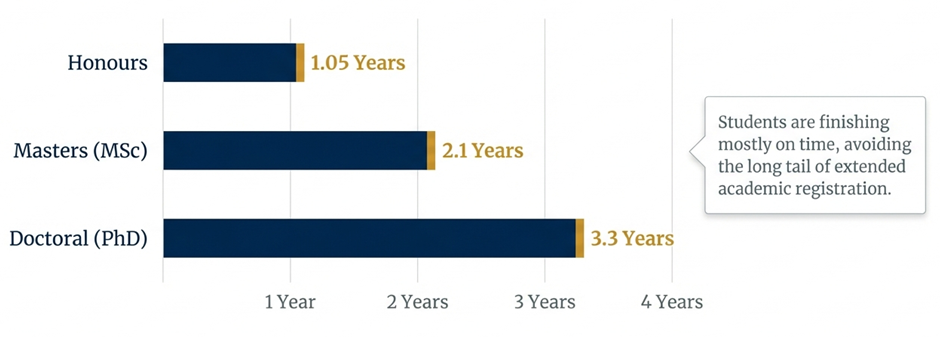
Hodges further highlighted the academic achievements of SANSA bursars, with 123 out of 149 postgraduate degrees conferred between 2019 and 2023. This represents an overall success rate of 82,5%, compared to the National Research Foundation (NRF)- funded average of 68%. SANSA bursars also complete their postgraduate degrees within stipulated timeframes.
Hodges explained that this research excellence feeds directly into operational capabilities at the 24/7 Space Weather Centre, a national asset that helps mitigate the harmful impacts of space weather on technological systems.
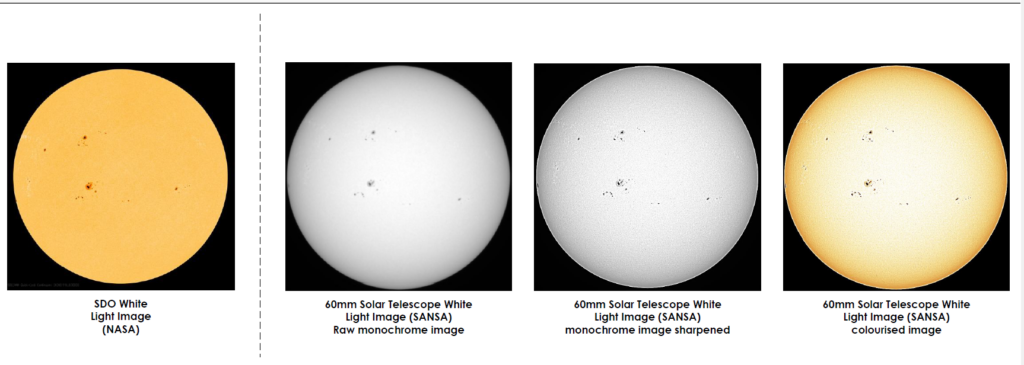
Government investment in space science infrastructure was highlighted by Hodges as a crucial driver of the ongoing success and growth of the sector. Investment in the establishment of the operational Space Weather Centre, launched in 2022, is a strong example of this. SANSA is now expanding its operational capabilities and has acquired a solar telescope, with plans to complete a solar observatory at the Hermanus site later this year.
On Friday, 30 January 2026, the Pan-African Space Showcase concluded its three-day engagement at SANSA Hermanus following an impactful UK–Africa engagement programme. The showcase was implemented by Innovate UK Global Alliance Africa, a UK international development initiative funded by the Foreign, Commonwealth and Development Office (FCDO).
The programme aims to build stronger, more equitable UK–African partnerships to maximise inclusive market access, funding and investment opportunities, and collaborative innovation between the UK, Nigeria, South Africa and Kenya.
Representatives from the Kenya Space Agency, the National Space Research and Development Agency (NASRDA) of Nigeria, the African Space Leadership Institute (ASLI), and the FCDO attended the showcase.
The showcase commenced on 28 January 2026 at Stellenbosch University with round-table discussions focused on strengthening Africa’s space capabilities and unlocking collaborative opportunities. On 29 January, delegates toured the satellite industry in Stellenbosch and Somerset West. The visit to South Africa concluded on Friday, 30 January 2026, at SANSA Hermanus.
SANSA CEO Humbulani Mudau welcomed the delegation, who then received a close-up view of space weather operations and the extensive network of instruments and data that underpin this capability. Presentations on Space Science, Space Weather and Space Operations were well received and sparked robust discussion among delegates.